
What is Environmental, Social and Corporate Governance (ESG)?

Environmental, social and corporate governance (ESG) criteria refer to three main factors investors consider with regard to a firm’s ethical impact and sustainable practices.
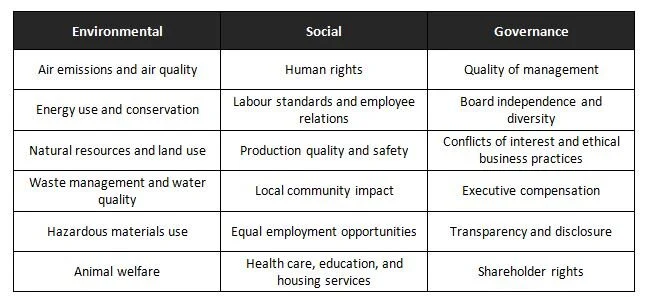
With regard to ESG investing, examples of ESG criteria include a company’s impact on climate change or carbon emissions, water use or conservation efforts, anti-corruption policies, board member diversity, human rights efforts and community development. A more detailed look at each area is shown in the table later in this article.
ESG Integration
In a previous article, we looked at the Investment Association (IA) Responsible Investment Framework and the definitions they use to describe and categorise the different ways we can invest responsibly. One of those is ESG Integration, which is:
The inclusion of material environmental, social, and corporate governance (ESG) factors into investment analysis and investment decisions. ESG Integration alone does not prohibit any investments, for example, investments within the oil industry may be allowed. Such strategies could invest in any business, sector or geography as long as the ESG risks of such investments are identified and taken into account.
Investing in ESG Integrated Funds
Investing in a fund that looks at ESG factors in its investment process is one of the least restrictive ways to incorporate your values into your investments. But it should be remembered that the nature of ESG funds means they could still invest in areas which may not align to your personal values, like mining and tobacco, so understanding the specific objectives of a fund, its ESG focus and strategy, and how the relevant ESG factors are measured is key.
When analysing a company, a manager of an ESG integrated fund will consider environmental, social and governance factors as part of their wider research. This is not just so they can label a fund as ESG integrated, but because they believe ESG factors play an important part in the long-term performance of a company.
Fund managers will seek out those companies they believe have the best prospects, and they will often also engage with companies to encourage changes where necessary, which is an example of positive stewardship practices.
The table below lists common ESG factors that are considered.
How we can help
If you would like to learn more about ESG and sustainable investing and to find out what options are available please get in touch and we will be happy to help. An initial chat is on us.
This article offers information about investing and should not be taken as personal advice. Remember, the value of investments can rise and fall and you may get back less than you put it.