
Budget 2025: What it means for professionals and retirees.
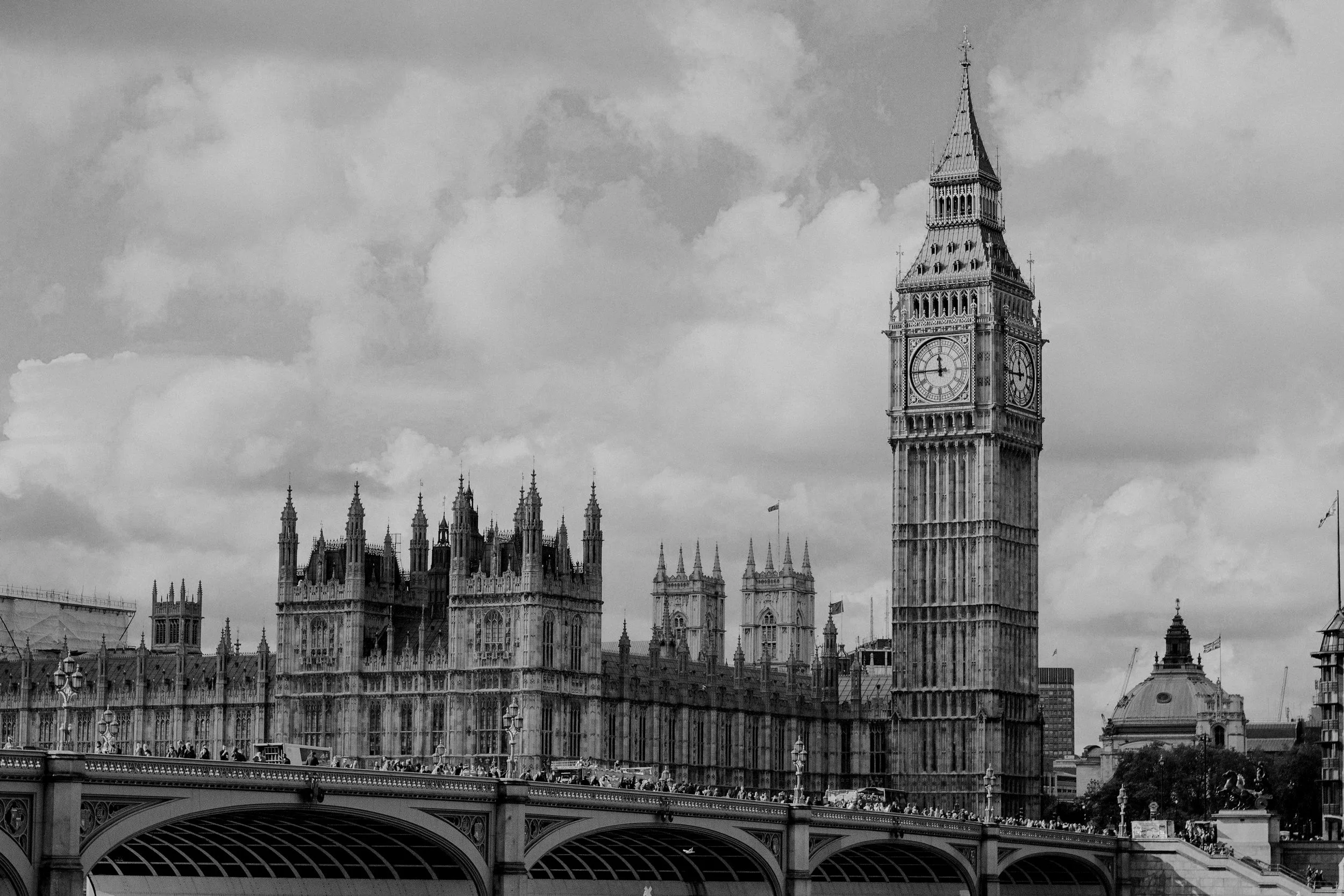
Budget 2025: What it means for professionals and retirees.
Introduction.
The 2025 Budget is one of the most consequential in a decade for households in the UK's economic middle and upper-middle tiers - the senior professionals, business owners, and independent retirees who rely on a combination of pensions, investments and property income.
While headline tax rates remain unchanged, almost every meaningful measure affecting personal wealth comes from threshold freezes, changes to asset-income taxation, and various structural reforms designed to narrow the gap between tax on work and tax on wealth, without imposing a full-blown wealth tax on the extremely wealthy.
For households earning roughly £75,000 to £250,000 (the managers, directors and specialists who form the core of Britain's professional class) and for retirees who have built substantial, but not generational wealth, the Budget represents a decisive shift in the UK's tax architecture.
It does not introduce a single dramatic measure; instead, it layers a wide series of gradual, revenue-raising steps that continue to compound over time.
A Budget framed by fiscal drag.
At the heart of the Budget is a commitment to maintain income tax and National Insurance thresholds at their current levels until 2031. Not changing something may sound good in principle, but the freeze has already been in place since 2021. By extending it again for three further years, the Chancellor has effectively guaranteed one of the most powerful stealth tax increases in modern times.
For the professional workforce, this means the higher-rate threshold of £50,270 is increasingly out of step with salary growth. A senior manager receiving a modest annual rise will, over time, see more of their income taxed at 40% and graduates in the workforce near the early-career £40,000 level will encounter higher-rate tax much earlier than previous generations did.
The Treasury's own documentation acknowledges that roughly three-quarters of the revenue raised from the threshold freeze will come from the top half of households. For higher-earning employees, fiscal drag is no longer a marginal effect - it is the foundation of the Budget.
For independent retirees, the impact is more nuanced. Many have little earned income and instead receive pensions, dividends, rental income or interest. It's here that the terminally static Personal Allowance and altered thresholds will take effect.
The largest shift: taxing income from assets more heavily.
The most far-reaching structural change in the Budget concerns the taxation of property income, dividends and savings. This is a clear political statement: to make the tax system "fairer", in the Chancellor's language, by narrowing the gap between the tax paid on labour and the tax paid on wealth.
New tax rates for property income.
From April 2027, rental income will be taxed using its own set of higher rates:
22% basic rate
42% higher rate
47% additional rate
For basic-rate landlords, this lifts the marginal tax rate on rental income by two percentage points. For higher and additional-rate landlords, the rate rises by the same margin. Professional households with second homes, legacy buy-to-lets, or portfolios inherited through marriage will feel this change directly. It arrives on top of existing restrictions on mortgage interest relief, making property investment comparatively less attractive for income generation.
Dividend taxation increases.
From April 2026, dividend tax rates rise by two percentage points for basic and higher-rate taxpayers:
10.75% (up from 8.75%)
35.75% (up from 33.75%)
The additional rate remains 39.35%
For business owners who draw remuneration through a blend of salary and dividends, this narrows the benefit of the traditional "low-salary, higher-dividend" strategy. For investors with significant taxable portfolios, it means a noticeable increase in the drag on investment income that is not sheltered within an ISA or pension.
Savings income tax rates rise, too.
Interest income also increases by two percentage points across all tax bands from April 2027. This affects individuals with sizeable cash holdings or fixed-income investments outside wrappers. With ISA limits frozen and cash ISA contributions capped for under-65s from 2027, this change reinforces the direction of travel: individuals are nudged towards equity-based ISAs and pension saving rather than large cash positions.
Reliefs and allowances tightened.
From April 2027, reliefs like the Personal Allowance can no longer be applied first against asset income; they must be used against employment income before they offset dividends, savings or rental income. This restricts the ability to strategically "stack" allowances, a technique commonly used in basic tax planning.
Together, these measures represent the most significant recalibration of asset-income taxation since the 2015–2020 period, when dividend tax reform and mortgage interest restrictions were introduced. The cumulative effect is to reduce the after-tax attractiveness of income-producing assets relative to tax-advantaged wrappers such as ISAs and pensions.
Inheritance tax frozen again, and pensions brought into scope.
Inheritance Tax thresholds remain frozen until 2031, continuing a long trend of rising asset prices pulling more estates into the IHT net. For households with property in the South East or London, the nil-rate band freeze compounds with the increase in house prices over the past decade, creating steadily growing exposure.
More significantly, from April 2027, unspent pension pots will be brought firmly within IHT's scope. This represents a significant policy shift. For several years, pensions had effectively served as intergenerational wealth vehicles: funds could be inherited tax-free in many circumstances, enabling well-off retirees to draw down non-pension assets first while leaving pensions untouched.
The new rule closes off that avenue. For independent retirees, it requires a rethink of withdrawal strategies. Spending from pensions earlier in retirement may become more rational, with ISAs acting as the more efficient estate-planning tool.
There are also targeted anti-avoidance rules affecting trusts and corporate structures designed to create excluded property. These will affect only a minority of wealthier households, but they reinforce the message that the government intends to tighten, not loosen, the inheritance tax framework.
Finding this useful?
Once a month, we send our latest articles on pensions, investments, mortgages, protection, estate planning and more - along with a couple you might have missed. Practical reading for anyone taking their finances seriously.
Join our readers →Further measures affecting business owners and investment reliefs.
Beyond the changes to inheritance tax and pensions, the Budget also narrows some of the reliefs available to business owners and investors. The most immediate change is a reduction in capital gains tax relief for those selling their businesses to Employee Ownership Trusts (EOTs). The relief has been cut from 100% to 50% with effect from the date of the Budget, reducing the incentive for founders to pass ownership into employee-led structures.
A second reform affects Venture Capital Trusts. From 6 April 2026, the rate of income tax relief available to investors will fall from 30% to 20%. While VCTs will continue to offer tax-free dividends and exemption from capital gains tax, the lower rate of upfront relief means the overall benefit is less generous than in recent years.
These adjustments will not affect every household, but they reinforce the broader pattern across the Budget: long-standing reliefs are being trimmed, and the government is narrowing the differential between the taxation of work, wealth and business ownership.
Salary sacrifice capped - a meaningful change for high earners.
For employed professionals, pension contribution strategies change again. From April 2029, the first £2,000 of annual contributions made via salary sacrifice will receive NICs relief, but contributions above that amount will not. This is a direct response to the widespread use of "super-sacrifice" arrangements by higher-earning individuals seeking to maximise tax efficiency.
This measure leaves auto-enrolment unaffected and protects the majority of basic-rate savers. But for directors, senior managers or high earners contributing large sums, the value of salary sacrifice reduces materially. In practice, it means more attention will shift back to personal contributions funded from post-tax income, with tax relief reclaimed via self-assessment.
A new Council Tax surcharge for homes worth over £2 million.
The Budget introduces a High Value Council Tax Surcharge for properties valued at over £2 million in England from April 2028. While details such as valuation methodology have yet to be published, the direction of travel is clear: the gap between the tax paid on a typical family home and the tax paid on high-value London and South East property will narrow.
For households with substantial primary residences or second homes, this will increase running costs. It is not yet equivalent to a mansion tax, but it shares its logic.
Motoring, student finance and the cost of living.
Among the practical day-to-day measures:
A new electric vehicle excise duty (a per-mile levy) from April 2028 will raise EV running costs, which is a relevant new cost for multi-car households.
Regulated rail fares will be frozen for a year from March 2026, softening the cost of commuting for professionals.
Fuel duty remains frozen until August 2026, with inflationary rises delayed.
The Plan 2 student loan repayment threshold is frozen from 2027 to 2030, meaning more graduates in professional roles will repay more.
Energy bills are expected to fall by around £150 per household from 2026 due to changes in green levies.
For retirees, Winter Fuel Payments are restricted to those with taxable income under £35,000, ending a universal benefit for more comfortable households.
What the Budget means for the professional middle class.
The Budget asks for larger contributions from the top half of earners and from households with material investment income. For professional families, the effects are cumulative rather than sudden:
More income is taxed at higher marginal rates due to fiscal drag.
Reduced tax efficiency of rental property and dividend strategies.
Higher taxation of cash and savings interest unless sheltered.
Less scope to use allowances creatively.
Constraints on salary sacrifice for pension planning from 2029.
A tougher inheritance tax environment, especially regarding pensions.
At the same time, nothing in the Budget changes the fundamentals of long-term planning: pensions remain tax-efficient; ISAs remain tax-free; and asset allocation (rather than tax structure) remains the primary driver of wealth creation.
What the Budget means for independent retirees.
Retirees face a different set of pressures:
An administrative fix for State Pension and income tax thresholds protects only those with no other income.
Pension pots becoming subject to IHT will require a reassessment of the withdrawal strategy.
Investment income outside wrappers becomes less efficient, increasing the value of careful sequencing between ISAs, pensions and general accounts.
Property income becomes less attractive, potentially encouraging portfolio downsizing or simplification.
Retirees with mixed income sources and significant assets must now treat tax planning as a more dynamic, rather than static, exercise.
A Budget of many levers rather than one headline change.
Budget 2025 does not reshape the UK tax system overnight. Instead, it introduces incremental measures that collectively shift the tax burden towards higher earners and those with greater accumulated assets. For many professional and affluent households, the result will be a material increase in effective tax over the next three to five years, not because any individual rate has drastically risen, but because the entire system has been recalibrated.
The winners are households with very low earned income, who benefit from strengthened welfare provision, and those who rely primarily on the State Pension alone, who avoid new administrative burdens.
The losers, to the extent the Budget creates them, are the households whose finances straddle both income and wealth: the senior engineer with a rental property, the corporate manager drawing dividends from a family company, the self-made retiree with a diversified savings portfolio.
For this group, the Budget is best understood not as a single shock, but as an early signal of a long-term trend. Managing wealth will demand greater attention, more careful sequencing of withdrawals, and a deliberate focus on tax-efficient structures. The tools remain available, but the margins between effective and ineffective planning have narrowed.
Conclusion.
This Budget asks more of higher earners and households with significant savings or property income. For many, the implications will unfold gradually rather than overnight, but they will still be felt in real terms over the years ahead. Understanding how the changes interact with pensions, investments and estate planning is not always straightforward, and careful planning can make a measurable difference. Speaking with a qualified financial adviser can help individuals navigate these changes with confidence and make informed decisions for the future.
What’s next?
Wherever you are in the UK, we invite you to book a free initial consultation with one of our experienced financial advisers. Whether you’re concerned about the economic outlook, managing your investments, planning for retirement, or better understanding pensions, we provide expert advice tailored to your needs. Based in Tunbridge Wells, Kent, we proudly serve clients nationwide.
Locally, we serve clients across Kent, including Ashford, Maidstone, Sevenoaks and Tonbridge. In East Sussex, we have clients in Bexhill, Crowborough, Eastbourne, Hastings, Heathfield and Uckfield.
Don't forget, this article offers general financial information and should not be taken as personal advice. Remember that investments and pensions can go up and down in value, so you could get back less than you put in. Tax rules can change and will depend on your individual circumstances.