
What's the catch with equity release and is it a scam?

What's the catch with equity release and is it a scam?
We recently posted a poll on Twitter, asking our followers to vote on what their opinion is of equity release. The results were a stark 50:50 split between it being a useful way to release cash and to avoid it at all costs. Why is there such a disparity in attitude towards equity release? Is equity release a scam and is there a catch?
What’s your opinion of #equityrelease? What did we miss?
— AV Trinity | Tunbridge Wells (@AVTrinityLtd) November 1, 2021
What is Equity Release?
If you are unfamiliar with the basics of equity release, you can read our article 'What is equity release and how does equity release work?'. As a quick introduction, equity release is a way for a homeowner aged over 55 to release a portion of the value of their home equity as tax-free cash and the most popular equity release plan is a lifetime mortgage.
In many cases, there are no capital or interest repayments to make until the property is sold or the owners go into full time, residential care. Equity release is growing in popularity as it enables homeowners to take advantage of rising house prices without having to leave their homes.
Is Equity Release a scam?
There is a lot of misinformation on the internet about equity release and many believe it is a scam. However, this is simply not true; equity release is not a scam. The equity release market is governed by the Financial Conduct Authority (FCA) and people offering advice on an equity release scheme have to be qualified (more often than not, equity release advisers are qualified mortgage advisers that have chosen to sit additional exams). As a result, there is a lot of oversight, procedures to follow and compliance processes to adhere to when giving financial advice in relation to equity release.
Nonetheless, as equity release is only available to older homeowners and involves giving up a portion of the value of their home, some family members may consider equity release to be a scam as it affects the amount of inheritance they may receive. This news may often come as surprise as older generations may have different attitudes toward the open discussion of money and may not have mentioned their need for extra funds or plans to release some of their home equity to their children. This news may then only come to light after a family member has passed away and as we all know, inheritance often does funny things to people, not least when it may be significantly less than someone expected to receive.
Another area when equity release may be considered a scam is when an equity release product or loan is subject to a higher than average interest rate and, if the homeowner hadn't properly shopped around, family members may be upset when they find out the full details of the lifetime mortgage after the paperwork has been signed and the cash lump sum has been released by the lender to the borrower; by which point it's too late to do anything about it. Technically this isn't a scam or fraud but it could be considered a rip-off. Inevitably, there are companies out there looking to take advantage of people with a loan that isn't the best value.
To avoid situations like this occurring, it's important for anyone considering equity release to choose an FCA-regulated financial adviser that has signed up to the Financial Vulnerability Taskforce's Code of Practice as they have several processes in place to help vulnerable people make better financial decisions.
How do fraudsters use equity release as a front for identity theft and other scams?
As we've shown, equity release is a perfectly legal tool that is a great option for many older homeowners that are looking to extract some of the value in their home to pay for renovations, help other members of the family or supplement their income. However, there are of course always people out there looking to take advantage of others. One of the most common methods of fraud is identity theft.
In order to steal a homeowner's identity, a scammer will typically set up a genuine-looking advert on Google or social media that links to a webpage featuring an equity release calculator, where the homeowner has to provide their details in return for a personalised equity release quotation.
It’s this data collection process that forms the basis for identity theft. Often the forms will require far too much personal information to be input, often enough for the fraudsters to apply for loans or other financial products on the homeowner’s behalf.
To add insult to injury, the personal details are often also sold onto unscrupulous marketing agencies that bombard homeowners with further high-pressure sales calls, hoping they will sign up to high-risk investments. Unfortunately, the scammers see the homeowner as a qualified target because they have already given away that they have financial assets and also that they need extra money.
How to avoid falling for an equity release scam?
To avoid falling victim to an Equity Release scam, it's important to carefully consider the sites you choose to input your personal information on and to only deal with a provider or Financial Adviser that’s part of the Equity Release Council. A Financial Adviser that has signed the Financial Vulnerability Taskforce's Code of Practice is a good signifier that they care about their client’s best interests.
Equally, if you are only taking tentative steps to see how much money you could raise from equity release, you can use a basic equity release calculator that doesn’t require any personal information at all. We’ve built one from scratch that gives you the result straight away – no contact details required.
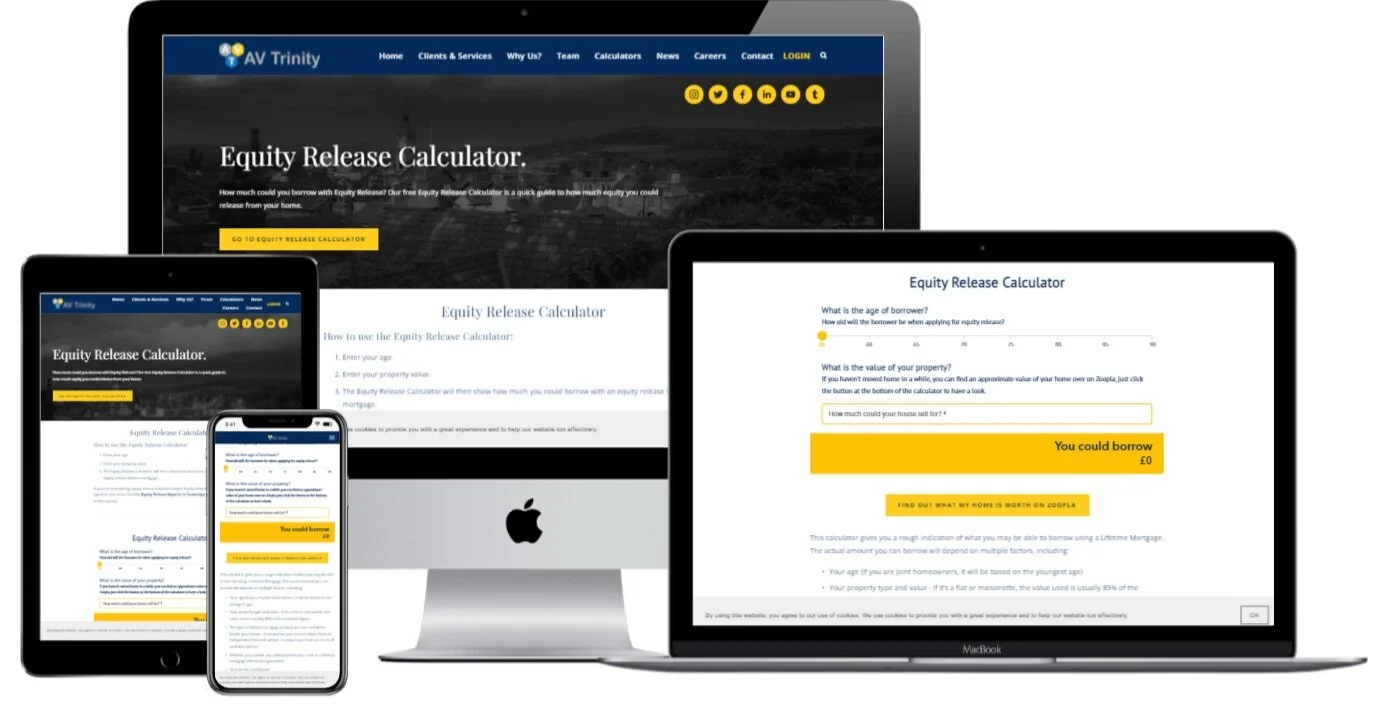
Try Our Equity Release Calculator - No contact details are required and no salesperson will call.
If you then think that equity release could be right for you, you can contact one of our financial advisers for a free initial consultation. We can talk over the phone, video chat or you can come to our office here in Tunbridge Wells for a coffee.
How to avoid an equity release scam:
Involve responsible family members or trusted friends whenever possible.
Avoid online equity release calculators that ask for lots of personal information.
Make sure you only talk to an adviser or provider that is a member of the Equity Release Council.
Ensure your Financial Adviser has signed the Financial Vulnerability Taskforce’s Code of Practice.
Check your Adviser’s accreditation with the Financial Conduct Authority.
Ensure you get a couple of quotations to make sure you are getting best value.
Always take some time to think before signing an Equity Release agreement. You should not be put under any pressure.
What’s next?
You can read our in-depth article, What is Equity Release and how does Equity Release work for a more detailed look at Equity Release or head over to our equity release calculator to get a quick estimate on the amount of money you could release from your property with a home equity loan without having to input any personal details.
How can AV Trinity help with your Equity Release questions?
If you need responsible equity release advice you can speak to a Chartered Financial Adviser here in Tunbridge Wells, wherever you are in the UK. Our financial advisers are Equity Release experts and on hand to help you find an equity release plan that suits your needs, whether that's a lifetime mortgage or home reversion plan. We are members of the Equity Release Council and signatories of the Financial Vulnerability Taskforce.
Your financial adviser can also offer broader financial advice on a range of topics from pensions and investments to inheritance tax and estate planning. We offer a free, no-obligation initial consultation at our office, over the phone or by video chat.
This article offers information about financial planning and should not be taken as personal advice. Equity Release will reduce the value of your estate and may affect your entitlement to state benefits.